"Severe menstrual pain is not "normal" — it deserves proper evaluation and individualized care."
More Than Just Painful Periods
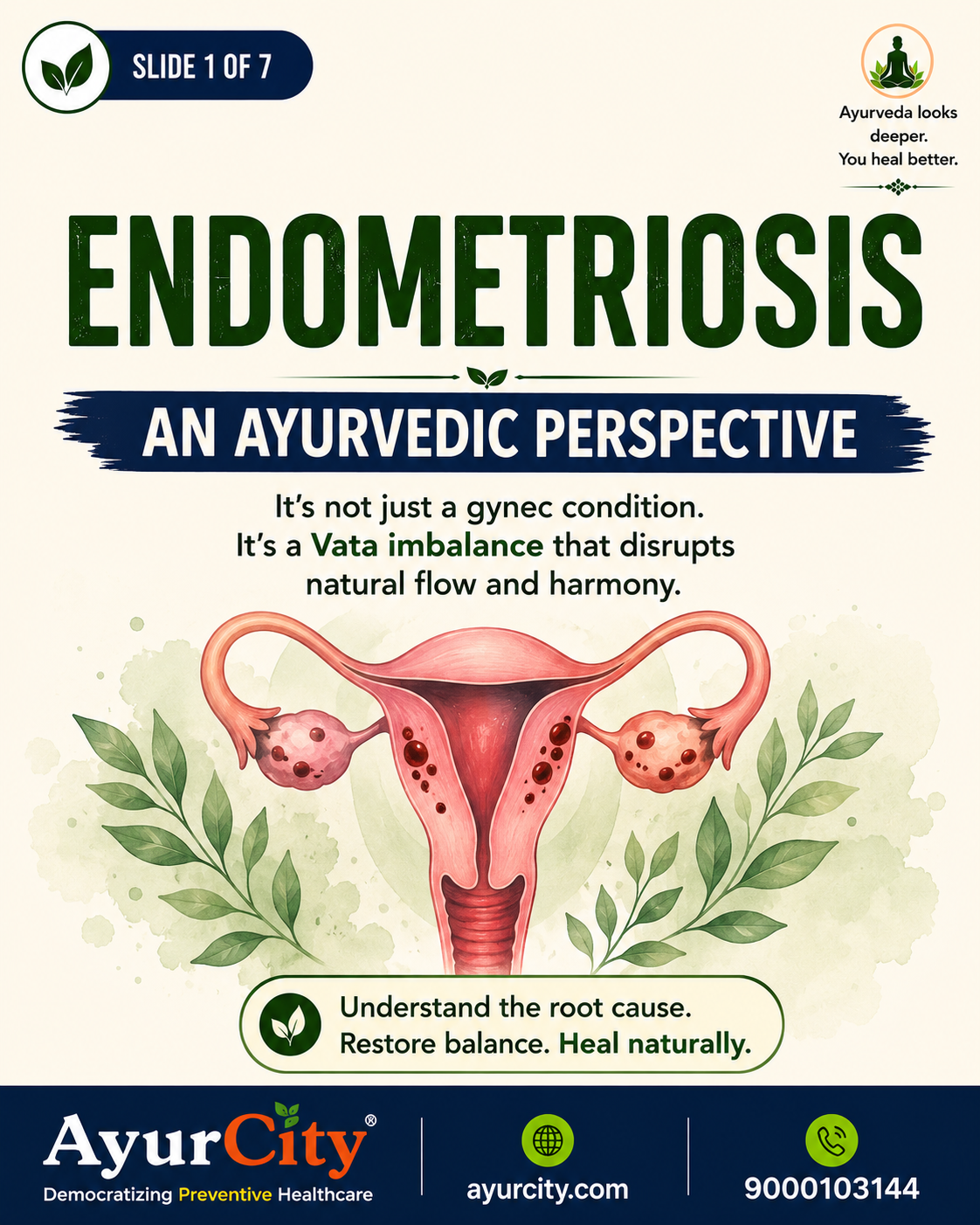
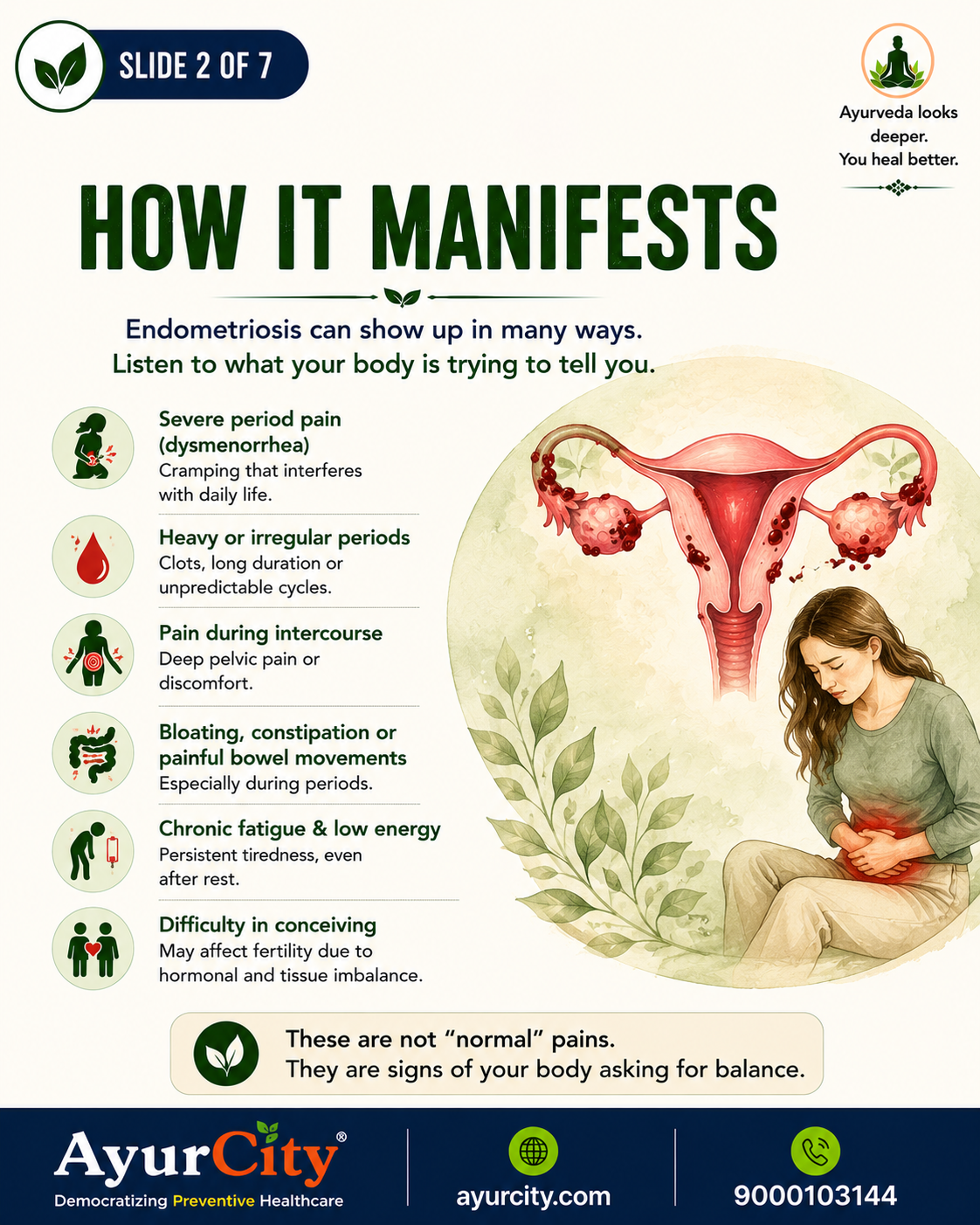
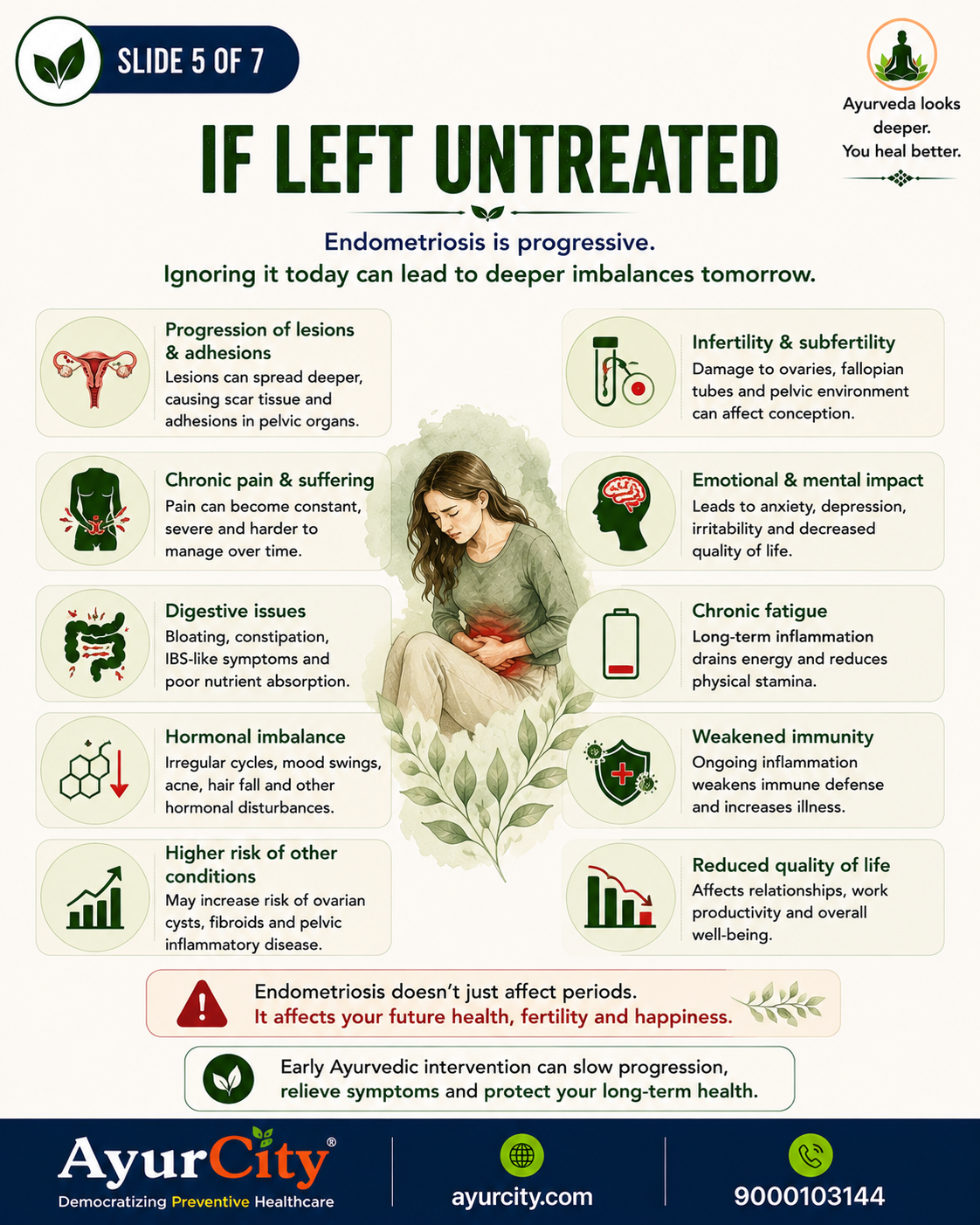
Endometriosis is more than just painful periods. Many women are told that severe menstrual pain is "normal." It isn't. Endometriosis is a complex condition that deserves proper evaluation and individualized care.
Understanding Apana Vayu and Pratiloma Gati
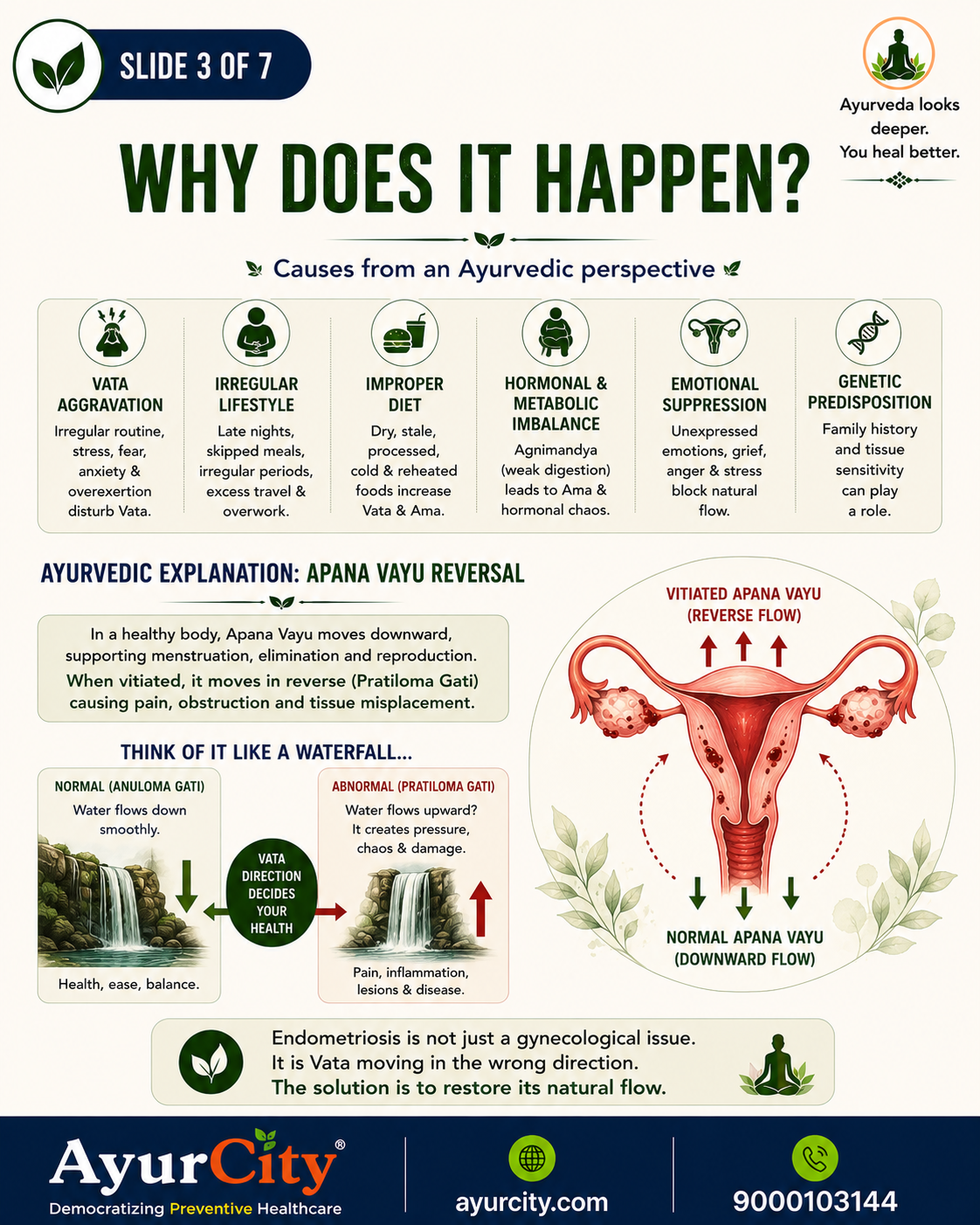
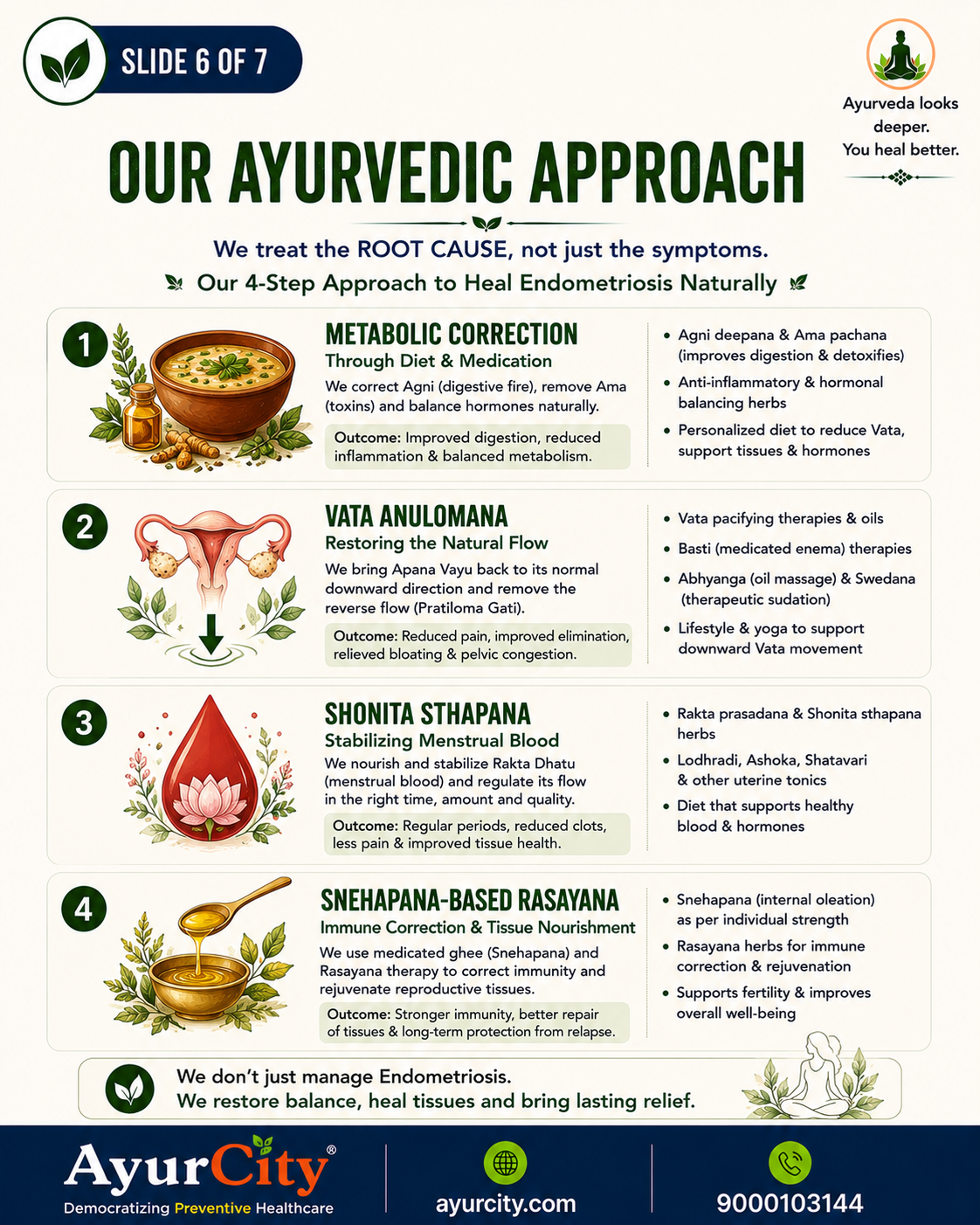
From an Ayurvedic perspective, one important way of understanding this condition is through Apana Vayu — the subtype of Vata responsible for the normal downward movement involved in menstruation, elimination, and reproduction. When this natural flow becomes disturbed (Pratiloma Gati), Ayurveda describes pain, obstruction, and imbalance in the pelvic region — like a waterfall trying to flow upward instead of downward.
Restoring Function, Not Just Reducing Pain
The goal of Ayurvedic management is not simply to reduce pain — it is to restore healthy function. The approach focuses on metabolic correction through personalized diet and medicines, Vata Anulomana (restoring the natural downward movement of Apana Vayu), Shonita Sthapana (supporting healthy, balanced menstrual flow), and Snehapana-based Rasayana (nourishing tissues and supporting immune balance as appropriate for the individual).
Lifestyle Choices That Matter
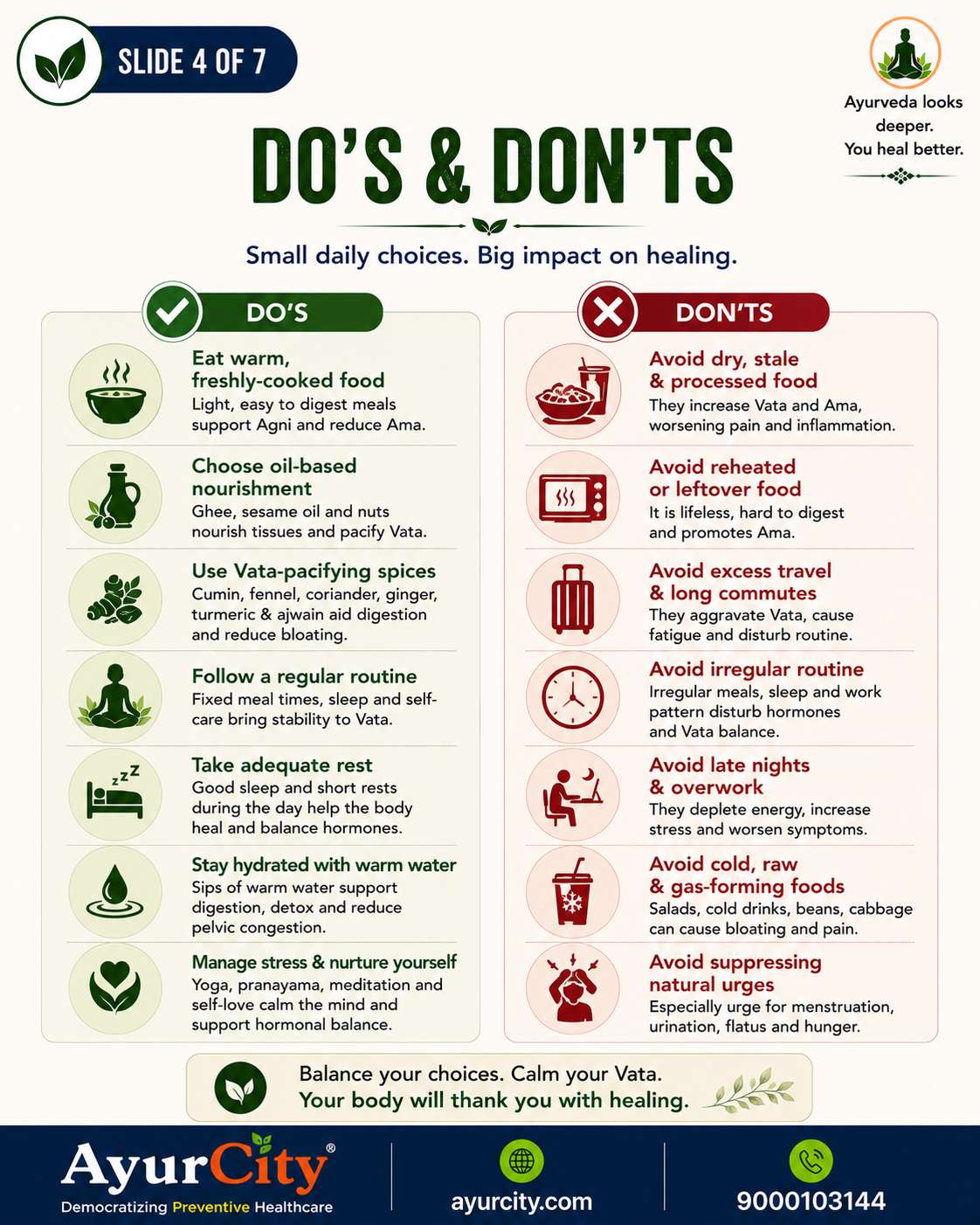
Favor warm, freshly cooked meals; regular sleep and routine; adequate rest; and nourishing healthy fats. Avoid dry, stale, or reheated foods; excess travel and overexertion; irregular meal timings; and chronic sleep deprivation.
When to See a Gynecologist
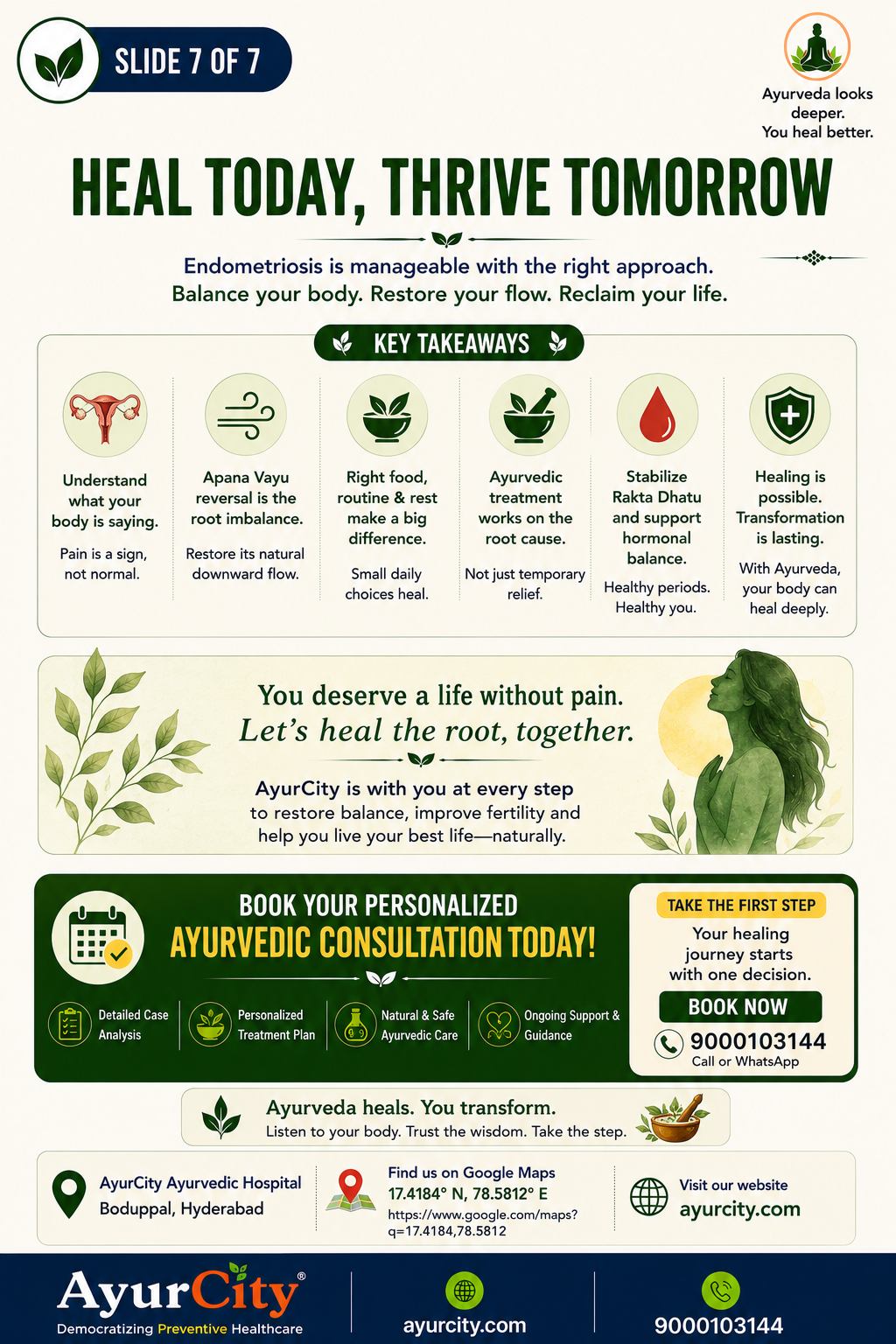
Persistent pelvic pain, severe menstrual pain, pain during intercourse, infertility concerns, or bowel/bladder symptoms should always be evaluated by a qualified gynecologist. Ayurveda can complement appropriate medical care with individualized lifestyle guidance and treatment.
Ready to start your healing journey?
Speak directly with Dr. Harikrishna Goka's team to understand how Ayurveda can help you.