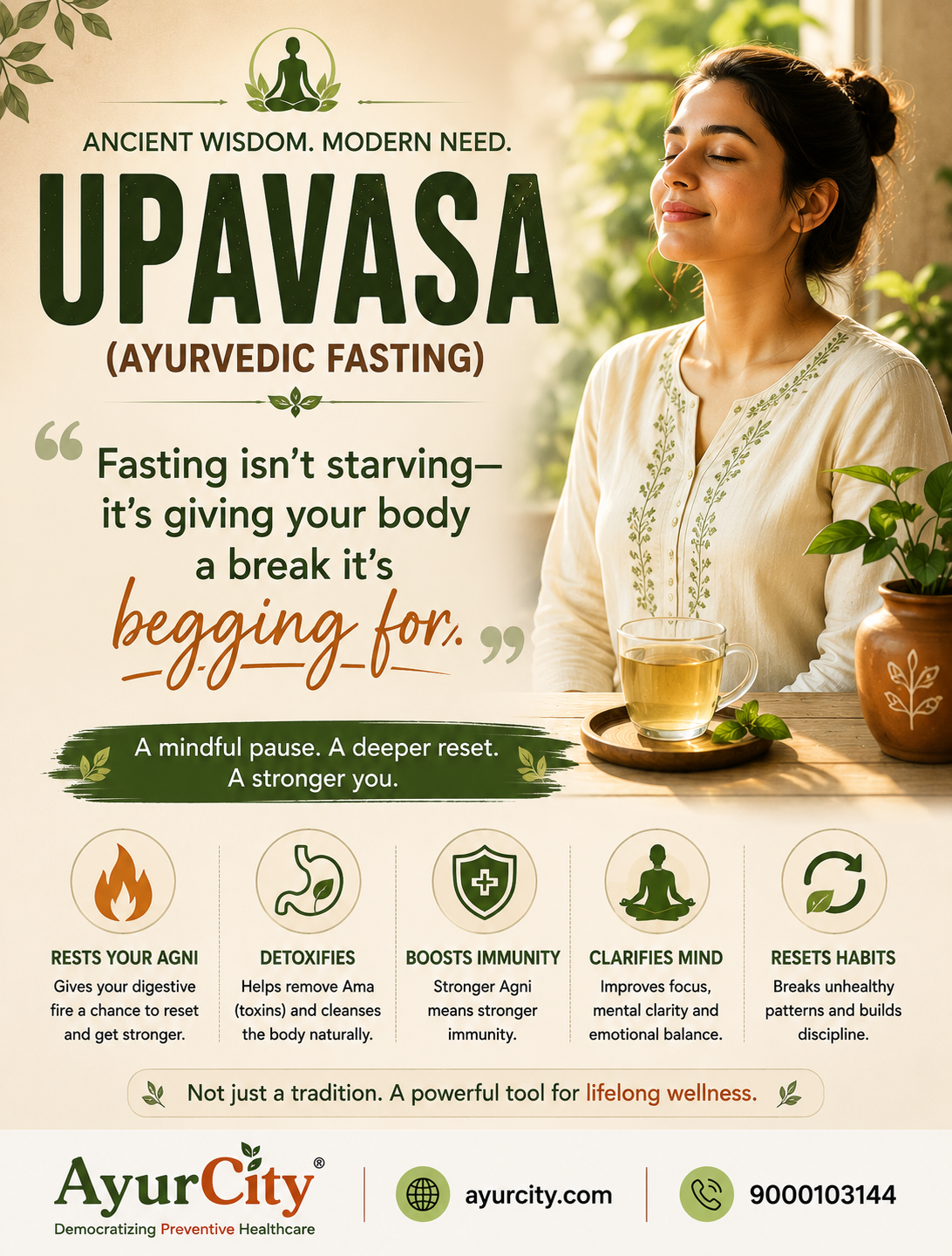
"Fasting is not about eating less. It's about digesting better."
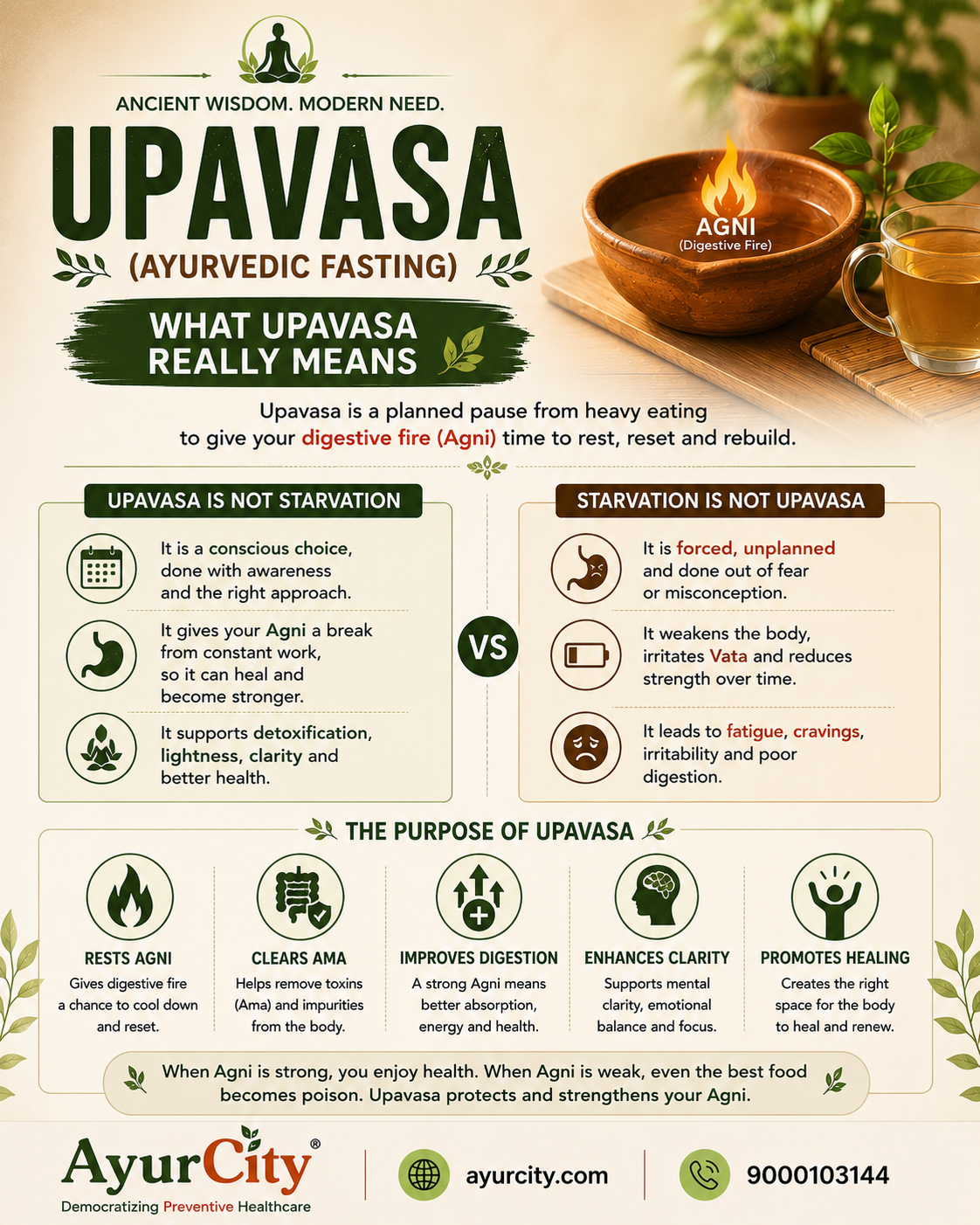
What Upavasa Really Means
Most people think fasting means simply not eating. Ayurveda sees it differently. Upavasa is not about starving yourself — it is about giving your Agni (digestive fire) time to rest, reset, and regain its strength. When Agni weakens from constant heavy eating, irregular meals, processed foods, or overeating, the body starts accumulating Ama (undigested metabolic waste), which can show up as bloating, indigestion, heaviness, fatigue, poor appetite, and reduced immunity. A properly planned fast can support digestion, improve lightness, and encourage more mindful eating.
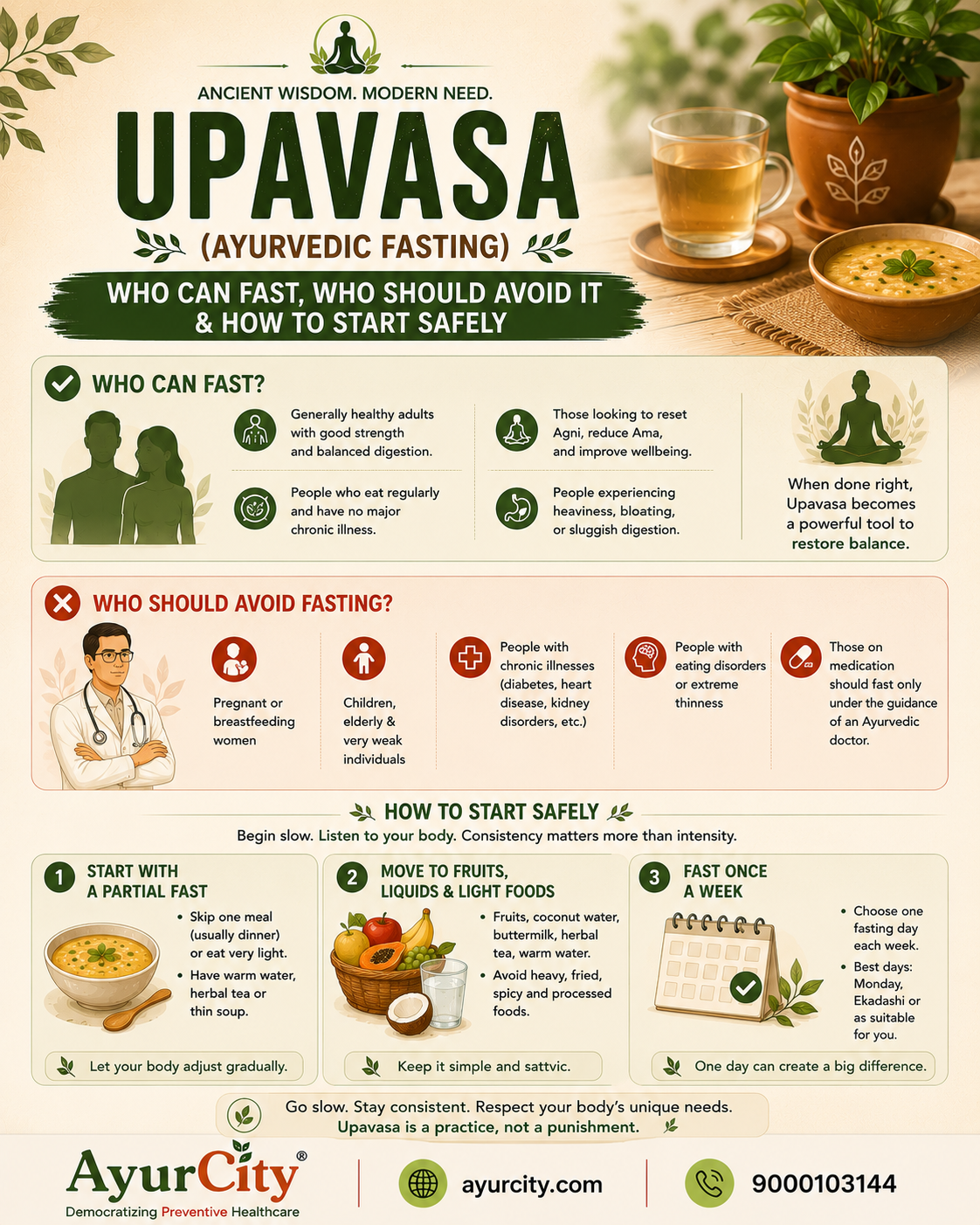
Who May Benefit — and Who Should Avoid Fasting
Healthy adults with good strength, people experiencing heaviness or sluggish digestion, and those looking to reset their eating habits may benefit from fasting. It is not for everyone, though: pregnant or breastfeeding women, children and frail older adults, and people with certain chronic illnesses or medications that require regular meals should avoid fasting unless medically supervised.
If You're New to Fasting, Start Gently
Begin with a partial fast or lighter meals rather than a full day without food. Choose warm liquids, soups, or easy-to-digest foods, and once a week is enough for most people to start.
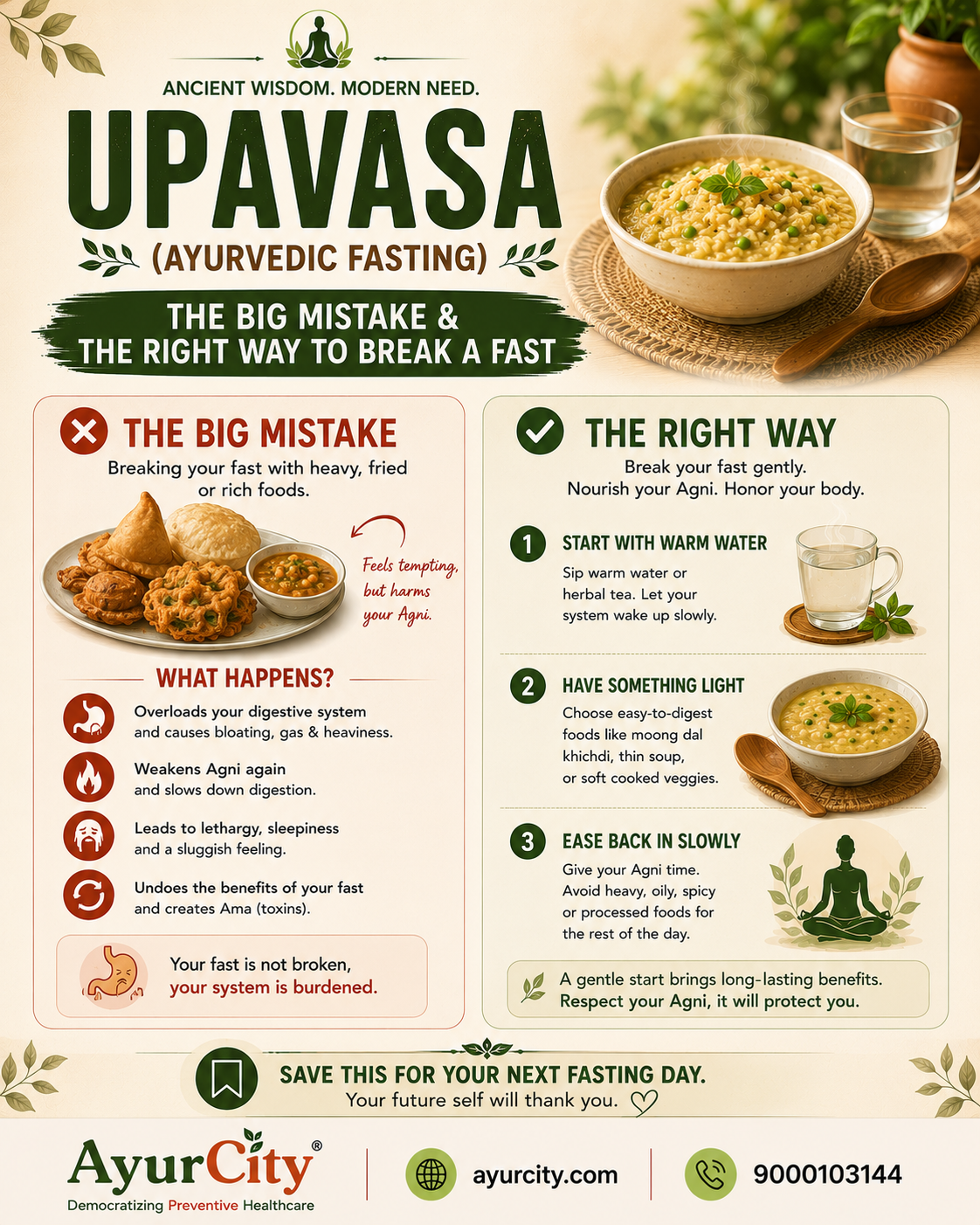
The Right Way to Break a Fast
The biggest mistake after fasting is celebrating with fried, oily, or very heavy food — this overloads digestion and undoes many of the fast's benefits. Break your fast the Ayurvedic way instead: start with warm water, then move to light foods like khichdi, thin moong dal soup, or soft cooked vegetables, easing back into regular eating instead of rushing. The ideal fasting approach always depends on your Prakriti, current Vikriti, Agni, age, season, and overall health.
Ready to start your healing journey?
Speak directly with Dr. Harikrishna Goka's team to understand how Ayurveda can help you.